
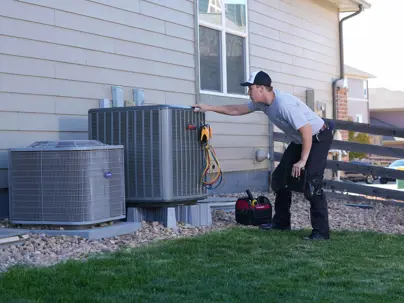
Denver summers have a reputation for being mild compared to the humid heat of the South or the relentless heat of the desert Southwest. And in many ways, that reputation is earned. But anyone who has lived along the Front Range knows that July and August can bring stretches of genuine heat, with temperatures regularly climbing into the 90s and occasional triple-digit days. Combine that with the wide temperature swings between afternoon highs and overnight lows, the intensity of high-altitude sun, and the dry air that can make it hard for your body to regulate temperature, and you have a climate that puts real demands on a home cooling system.
The good news is that a well-maintained air conditioner is well-equipped to handle a Colorado summer. The following tips will help you get the most out of your system, keep your energy bills in check, and reduce the risk of a breakdown when you need cool air the most.
Start With the Filter
If there is one maintenance task that has the biggest impact on your air conditioner's efficiency and lifespan, it is changing the air filter regularly. A clogged filter restricts airflow through the system, forces the blower to work harder, reduces cooling capacity, and over time can cause the evaporator coil to freeze. During the peak summer months, when your system may be running for many hours each day, filters can fill up faster than expected.
For most Denver households, checking the filter every 30 days during summer and replacing it when it looks dirty is a reasonable approach. Homes with pets, recent renovations, or multiple occupants may need to change filters more frequently. If you are unsure what filter is right for your system, a MERV rating between 8 and 11 is appropriate for most residential AC units. Higher-rated filters provide better filtration but can also restrict airflow if the system is not designed to handle them.
Give Your Outdoor Unit Room to Breathe
The outdoor condenser unit releases the heat that your air conditioner pulls out of your home. To do that effectively, it needs adequate clearance on all sides and access to unobstructed airflow. Over the course of a spring and early summer, landscaping can grow quickly, and it is easy to end up with shrubs, grass, or other vegetation crowding the unit.
As a general guideline, keep at least two feet of clear space on all sides of the outdoor unit, and at least five feet of clearance above it. Remove any debris, leaves, or grass clippings from around the base of the unit regularly. Avoid planting shrubs or hedges close to the unit, and if you use a decorative screen or enclosure for aesthetic reasons, make sure it does not restrict airflow. A unit that cannot exhaust heat efficiently will run longer, consume more energy, and wear out faster.
Use Your Thermostat Strategically
One of Denver's natural advantages for homeowners is the dramatic drop in temperature that typically occurs in the evenings and overnight. On many summer days, temperatures that reach the upper 80s or low 90s in the afternoon will fall into the 50s or 60s by midnight. You can use this to your advantage.
Opening windows in the evening to let cool outdoor air flush through the house, then closing them and drawing shades in the morning before the heat builds, can significantly reduce the burden on your air conditioner during the hottest parts of the day. Setting your thermostat a few degrees higher during the hours when the outdoor temperature is closest to your indoor target temperature reduces run time without meaningfully affecting comfort.
If you have a programmable or smart thermostat, setting it to pre-cool the home slightly before the hottest part of the afternoon (typically 2 p.m. to 6 p.m.) and then relax back to a higher setpoint as temperatures begin to drop in the evening is an efficient strategy for Denver's climate. The goal is to work with the daily temperature cycle rather than against it.
Keep the Vents Clear and the Registers Open
A common misconception is that closing supply vents in unused rooms saves energy. In a forced-air system, this is generally not the case. The system is designed to move a certain volume of air, and closing vents increases pressure throughout the duct system, which can cause the system to work harder and potentially damage components over time. Keep all supply vents open and unobstructed, and make sure return air grilles are not blocked by furniture, rugs, or curtains.
While you are checking vents, take a look at the visible sections of your ductwork for any obvious gaps, disconnections, or sections that appear to be sagging or pulling apart at the joints. Leaky ducts can waste a significant amount of conditioned air before it ever reaches the living space, and duct sealing is a relatively straightforward fix that can meaningfully improve efficiency.
Schedule Professional Maintenance if You Have Not Already
If your air conditioner has not been professionally serviced this year, summer is not too late to schedule it. A maintenance visit from a qualified HVAC technician includes cleaning the coils, checking refrigerant levels, inspecting electrical connections, lubricating moving parts, and verifying that the system is operating within its designed parameters. These tasks directly address the most common causes of AC inefficiency and failure.
For Denver homeowners, there is also a practical seasonal reason to stay current on maintenance. When temperatures spike in July and August, HVAC contractors across the Front Range become very busy very quickly. A system that develops a problem during a heat wave may mean several days without air conditioning while you wait for service. Maintenance completed before the heat arrives catches potential problems before they become urgent ones.
Know the Signs That Your System Is Struggling
Even a well-maintained air conditioner will show signs when it is working harder than it should. Pay attention to the following:
- The system runs continuously but the house never reaches the set temperature
- There are noticeable hot spots or rooms that cool unevenly
- Energy bills are significantly higher than previous summers
- The system makes unusual sounds, such as grinding, banging, or squealing
- You notice ice forming on the outdoor unit or the refrigerant lines
- There is warm air coming from the supply vents
Any of these symptoms warrants a call to a licensed HVAC technician. Catching a problem early almost always results in a simpler and less expensive repair than waiting until the system fails completely.
Consider Whether Your System Is the Right Fit for Your Home
If your air conditioner is more than 12 to 15 years old and you find yourself scheduling repairs every summer, it may be worth having a conversation about replacement rather than continuing to maintain an aging system. Newer high-efficiency units can deliver significant reductions in energy use compared to older equipment, and in Colorado, there are currently rebate programs available through Xcel Energy and the State that can help offset the cost of upgrading to a qualifying high-efficiency system.
A new system is not always the right answer, but it is worth understanding your options, especially if maintenance costs are adding up. You can learn more about our cooling services for Denver area homeowners, including AC maintenance, repair, and installation.
Stay Cool This Summer With Help From the Pros
At Tuscan Electric, Heating, Plumbing, we serve homeowners throughout the Greater Denver Metro Area, including Englewood, Littleton, Lakewood, Aurora, Centennial, and the surrounding communities. If your AC needs attention before the heat of summer arrives, or if you are dealing with a problem right now, reach out to our team online or call (720) 340-3547. We are here to help.